










Innovative use of technology secured Brewer Smith Brewer Group (BSBG) the Project of the Year award at the Chartered Institute of Architectural Technologists(CIAT) Architectural Technology Awards (AT Awards) 2025. The architects won for their work on The Silk District Phase 2, which judges said demonstrated industry-leading design capability, and leadership in advancing technology-driven solutions within architecture.
The Silk District project is a large- scale residential development that has transformed an East London site into a thriving, design-led community. The scheme features more than 700 apartments, alongside landscaped public spaces and community amenities. BSBG took on the roles of lead consultant, executive architect, and construction supervision for long-term client and partner, Mount Anvil.
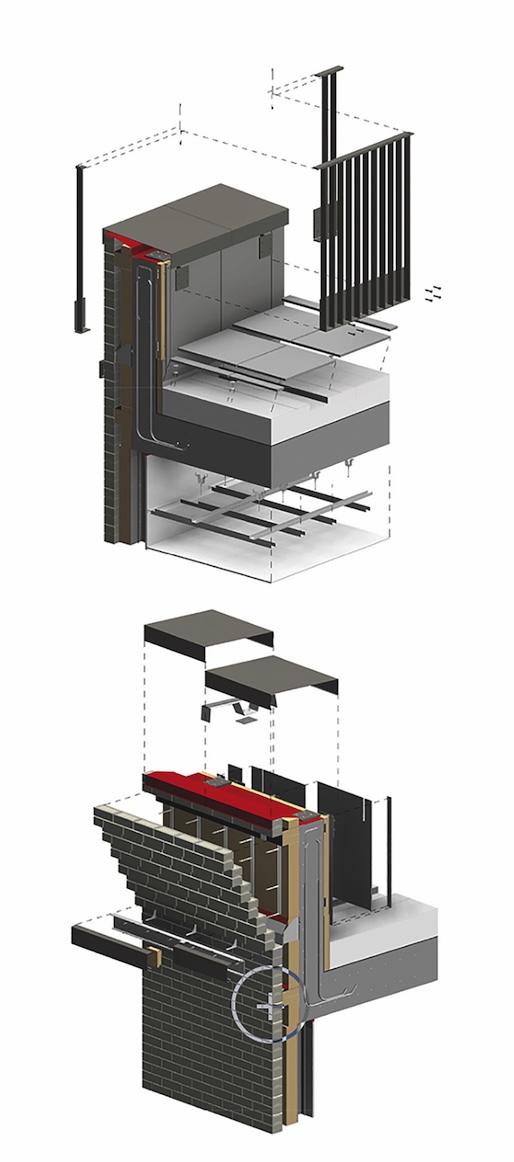
A decisive factor in the success of the project was BSBG’s pioneering use of 4D sequencing. By integrating construction programmes directly into the BIM environment, the project team was able to model and visualise the build process in real time. This allowed for improved coordination, proactive problem-solving, and clear communication between client, consultants, and contractors – significantly reducing risk and streamlining delivery. BIM 360 was used to connect all stakeholders – from London-based contractors to Dubai-based consultants – within a shared digital environment. This platform ensured consistency across documentation, version control, and model coordination. Perhaps the most groundbreaking contribution to the project’s technological narrative was the implementation of BSBG’s 4D Sequencing methodology.
Traditionally, BIM’s fourth dimension – time – is used at a macro level to indicate site logistics or project timelines. BSBG advanced this concept by applying time-based modelling to construction detailing itself. This innovative approach transformed static 2D drawings into fully sequenced 3D assemblies, simulating the precise, step-by-step build-up of individual components.
This process began with standard 2D details, which were then translated into highly detailed 3D BIM families. Each layer – whether structural, thermal, waterproofing or finish – was virtually assembled, validated, and documented. The sequence was then visually displaced to create a step-by-step breakdown of the full build-up, allowing contractors to understand not only what to build, but exactly how and when to build it.
The benefit of this approach lies in its clarity. The sequencing allowed for early validation of construction methods, eliminating ambiguity and reducing the risk of on-site improvisation or misinterpretation. This also ensured the protection of design integrity and reduced the potential for errors in multi-trade interfaces. The success of BSBG’s documentation and digital delivery standards has led Mount Anvil to formally adopt these protocols as part of their Employer Requirements, setting a new benchmark for future projects
The AT Awards judges recognised this innovative approach as a defining strength of the project.
Shaham Ahmed, head of studio in London, said: “Winning Project of the Year highlights our ability not only to deliver complex projects at scale but also to pioneer methods that add real value for clients and communities. We are immensely proud of what we have achieved with The Silk District Phase 2. It stands as a prime example of how innovative thinking, grounded in technical precision, can create lasting impact.”