









In honour of International Women’s Day Ros Bayliss, global director of marketing at Codelocks International Ltd, shares her reflections on underrepresentation, diversity, the skills gap and inclusive design in the sector.

Access control has long been a male-dominated sector, with not enough representation from women and minority groups. But quietly, over the years, things have been changing. We’re seeing a welcome mix of new voices, fresh perspectives, and different kinds of expertise coming into the sector.
And that shift matters. To stay relevant in today’s world, the industry needs to evolve. Change is a driver for new behaviours, products and ways of thinking. If companies don’t keep up, they risk being outpaced by their competition.
Codelocks is a microcosm, reflecting the industry and society as a whole. Talking with team members across the company we’ve discussed the challenges and progress happening in access control right now. Everyone’s insights bring something new to the table, helping paint a clearer picture of where we’ve been and where we’re headed.
The picture of the past and the need for change
Years ago, many women in access control were treated dismissively. As was the case in many sectors, it was implicitly assumed that because they were women, they wouldn’t have the skills needed for technical roles. “In the past I’ve had numerous occasions where I’ve arrived at a site only to be greeted by surprised faces,” says Michelle Saunders, sales manager at Codelocks UK. “These moments could have been disheartening, but I saw them as opportunities to challenge stereotypes.”
For some women in access control, these attitudes have made us work harder, driving us to achieve more. But this isn’t something everyone feels. Ultimately, pre-judging people’s capabilities can make people leave the sector, or not join in the first place.
The skills gap and risk of brain drain
The potential of people leaving isn’t something that any business can afford to shy away from. Speaking with Codelocks’ leadership team, it’s clear that this could be a make-or-break issue for many companies when it comes to the future of their business.
“We’re not going to have a choice [but to change],” said managing director of Codelocks International Ltd, Joanne Milne-Rowe. “Diversity is an asset to any company, and with an ageing workforce, there’s a critical need to bring more people into the sector while training and upskilling them as they enter. There’s a wealth of people out there who are hungry for learning and opportunities, and those businesses that take them in will move ahead of their competition.”
That’s an especially important point, when 54% of UK businesses say they’re struggling to hire the right skills. The talent gap is making it harder for companies to hit goals and grow. Drawing on a diverse workforce can address these skills gaps, as can increased training.
Trade bodies such as the Guild of Architectural Ironmongery (GAI) can help people with their skills. “The focus on CPD and regional hub events provide a fantastic opportunity to network, exchange experiences, and learn new skills,” says Saunders, who was recently appointed vice chair to the GAI Community Hubs.
“The support I’ve gained from being part of the GAI has been incredibly helpful, allowing me to expand my knowledge and grow professionally. I’d encourage everyone to start engaging with trade bodies like the GAI, as training helps employers build teams with the right skills, while giving employees the opportunity to advance their careers and future-proof themselves.”
Digitalisation to diversity
Digitalisation has led to new digitally integrated products that require whole new skillsets to create. For example, almost every supermarket now has a smart locker array, integrated with several digital apps that are designed with both delivery drivers and customers in mind.
People have to build these new digital products, and in my experience, the new fields and teams within them have a greater share of women than traditional access control. Whether it’s the digital designers responsible for creating user interfaces, or coders responsible for building the back end of the applications that allow integrated solutions, there’s more representation in these areas.
This view is supported by recent research from the Department for Science, Innovation & Technology. Its Diversity in UK Tech report shows a fast-moving and evolving industry where diverse groups are starting to gain more visibility. But it also points out ongoing challenges, like poor gender diversity, both unconscious and conscious bias, and a trend where women and minority groups are mostly found in junior roles. That’s a sign of limited chances to move up the ladder into senior positions.
Diversity = value
The value of promoting diversity doesn’t just come from the fact that it’s the right thing to do. As I touched on above, it has instrumental value. Through a process known as ‘cognitive diversity’, the more diverse a workforce is, the better its output. A diversity of perspectives gives an organisation a wider set of insights and approaches that would have otherwise been absent.
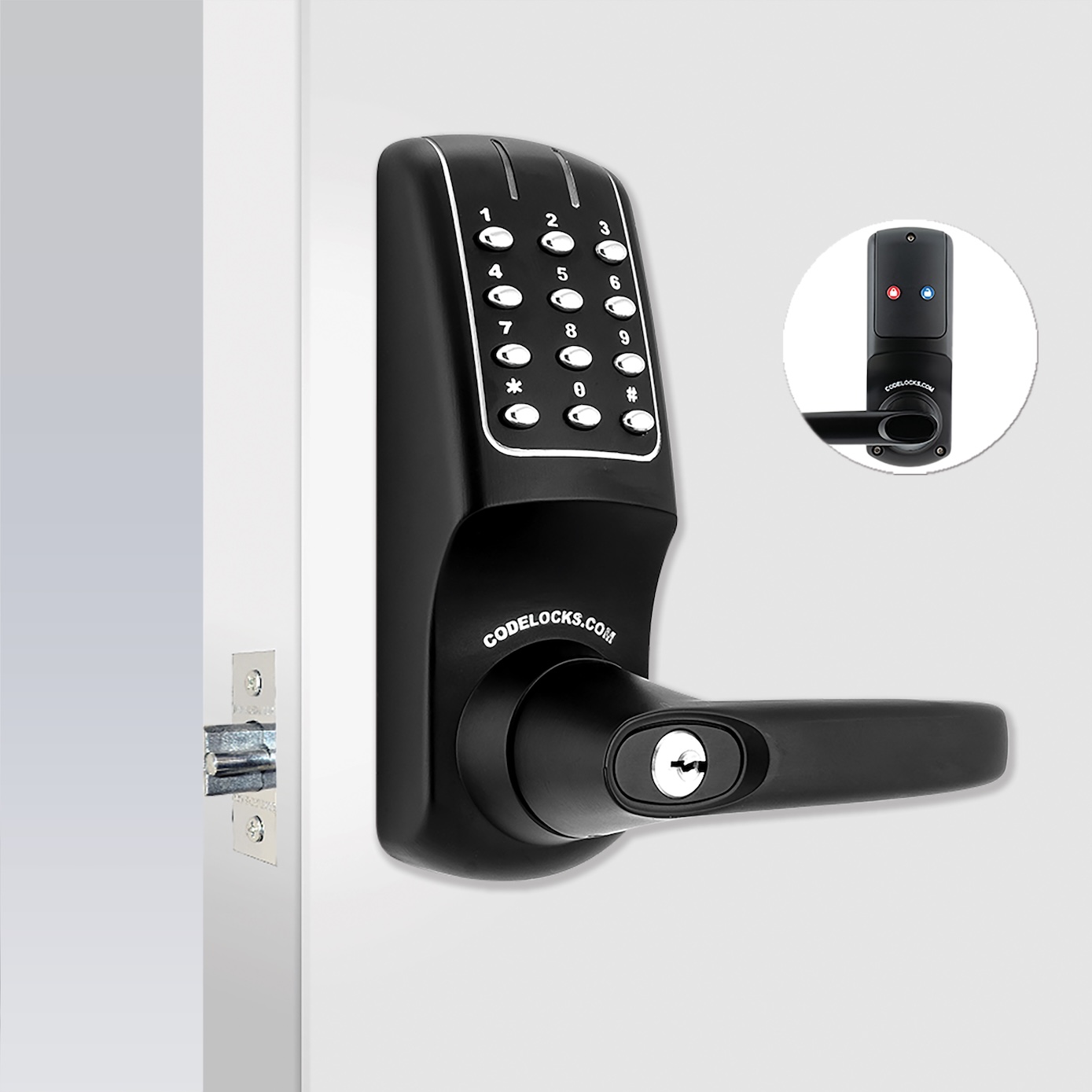
Importantly, diversity helps to prevent design teams from overlooking the needs of users. It contributes to making products that are inclusive and meet the needs of more people. For example, in healthcare, fitness, and workplaces, there are scenarios where user privacy and dignity are paramount. At Codelocks, we’ve addressed this with our Do Not Disturb (DND) lock solution, which helps to enhance user privacy in these spaces. The inputs of our diverse team and their perspectives were central to the development of this product.
Alongside products, the material and services that support access control customers also benefit from a diversity of inputs. Colleen Walsh, PR and communications manager for Codelocks Americas, highlighted the way that working directly with sales teams enhances the creation of compelling sales and marketing materials.
“By engaging with sales reps, I receive valuable insights and feedback that we can work into Codelocks marketing materials that help end users. If they tell us end users are commenting about product literature or instructions, we can adapt and change them to be more helpful.”
Creating welcoming workplaces and shaping an open future
My conversations with the team and industry experts show that the access control industry isn’t stuck in the past; it’s evolving. Progress may be quiet and gradual, as is often the case, but it’s still real. More inclusive products are being built, and more companies are realising the value of a wider range of voices and skills.
Still, inclusion doesn’t come as a happy accident all on its own. It takes commitment, from top to bottom – the C-suite to the warehouse and shop floor. It’s about creating the kind of workplace where people feel seen, supported, and safe to grow. As our European colleague, Elisa Burgos Martínez, sales manager at Codelocks Europe, put it: “I think the positive influence of doing your job well, in a healthy environment where you can trust your supervisors and feel comfortable making mistakes, can sometimes be forgotten.”
Our brand values underpin the culture we foster at Codelocks. Our diverse team and good workplace breed positive influence. Such combinations are good for people, culture and business. And as long as we continue to design based on inclusivity and train for tomorrow’s skills, we’ll keep making progress that works for everyone.