










If the reforms proposed in the Government White Paper on Construction Products become a new regulatory framework the impact on the architectural ironmongery sector will be huge. Douglas Masterson explains the implications
The UK Government has published its long-awaited Construction Products Reform White Paper, setting out proposals that will fundamentally reshape how construction products are regulated, tested, certified and specified in the UK.
For the architectural ironmongery sector, and particularly for those involved in fire door assemblies, the proposals represent far more than incremental change. They introduce a new regulatory framework that aims to strengthen safety, improve transparency and increase accountability across the entire product lifecycle. The White Paper acknowledges a number of systemic weaknesses in the current regulatory framework for construction products. bear in mind that this is all subject to consultation before new legislation is drafted.
Historically, the UK regime – inherited from EU legislation – was designed primarily to facilitate trade rather than ensure safety. As a result, regulatory coverage is limited: only products covered by designated standards or technical assessments are currently regulated. The Government estimates that around 37% of the UK construction products market falls within this framework.
Other issues identified include:
- A fragmented regulatory landscape that does not adequately address system-level risks
- Weak institutional oversight of testing and certification
- Limited transparency in product performance data
- Poor traceability and low levels of digitalisation
- Inconsistent competence across testing bodies, manufacturers and specifiers
- Insufficient enforcement powers for regulators
The White Paper concludes that these weaknesses have contributed to a culture
in which safety has not always been prioritised. The Government therefore proposes a significant strengthening of the regulatory system, supported by stronger oversight from the national regulator for construction products, the Office for
Product Safety and Standards (OPSS).
White Paper objectives
The Government’s reform programme is built around three core objectives.
- Safety
Ensuring construction products are safe for both intended and foreseeable use is the central aim. This will involve stronger oversight of testing and certification, clearer product information, improved traceability and greater regulatory powers to intervene where risks are identified.
- Growth and innovation
The White Paper emphasises the need for a stable and predictable regulatory environment that supports innovation and economic growth while avoiding unnecessary trade barriers. Alignment with European regulatory reforms is therefore a key consideration.
- Accountability
The reforms also aim to establish clearer responsibilities across the construction product lifecycle. Manufacturers, importers, distributors, designers, specifiers and installers will all be expected to demonstrate competence and ensure that products are appropriate for their intended use.
The White Paper itself is structured in three broad sections: an assessment of the current system, proposals for reform and the next steps for consultation and implementation.
The wider reform landscape
The White Paper forms part of a wider programme of regulatory reform that has been underway since the Grenfell Tower tragedy in 2017.
This included Dame Judith Hackitt’s Building a Safer Future review in 2018. It recommended a new regulatory framework based on clear dutyholders, stronger competence requirements and the creation of a “golden thread” of building information.
It also follows the Morrell-Day Review in 2023 which highlighted inconsistencies in testing oversight, weak audit processes and insufficient transparency in certification schemes. And the Construction Products Reform Green Paper last year consulted on a wide range of potential reforms, including stronger market surveillance, digital product information systems and expanded regulatory powers. The White Paper now sets out the Government’s formal response and proposed direction of travel.
Product requirements
Under the proposed framework, all construction products will fall under one of two regulatory routes.
– Designated Standards route
Products covered by designated standards will require:
- A Declaration of Performance
- UKCA conformity marking
- Mandatory safety and performance information
- Compliance with new Assessment and Verification Systems (AVS)
These systems replace the previous AVCP levels used under the EU Construction Products Regulation.
General Safety Requirement (GSR)
Products that do not fall within designated standards will be regulated under a new General Safety Requirement.
Manufacturers will be required to carry out a structured safety risk assessment covering intended use and foreseeable misuse, identifying hazards and implementing measures to eliminate or mitigate risks before products are placed on the market.
A further category will apply to products considered “critical to safe construction” where failure could lead to serious harm.
Fire doors are explicitly included in this category, meaning enhanced requirements are likely to apply to associated components such as ironmongery. These measures may include additional requirements around design assurance, installation competence and traceability.
EU, CE marking and third-party certification
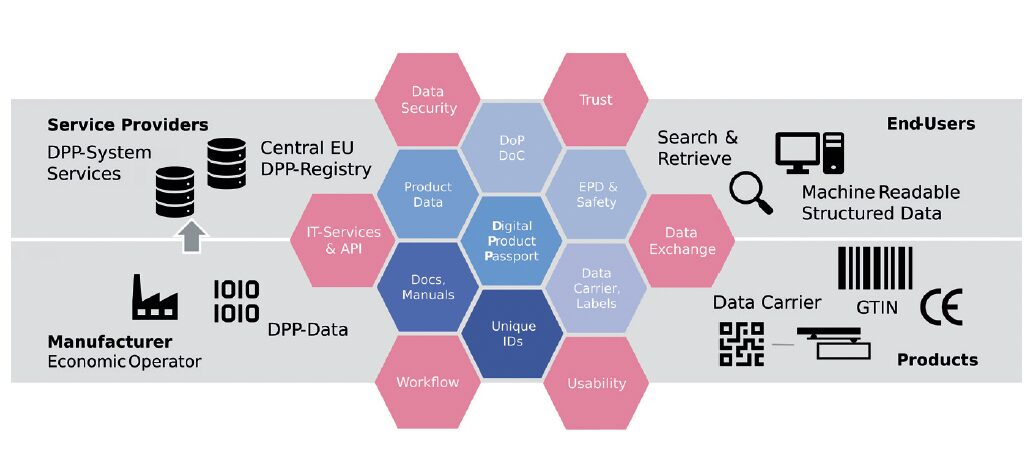
The updated EU Construction Products Regulation (EU-CPR 2024) introduces major changes including digital product passports, stronger sustainability metrics and increased transparency in testing and certification.
The UK Government has indicated that it intends to maintain close alignment with many of these principles, particularly where this supports safety and reduces friction in cross-border trade.

However, the UK will retain the ability to diverge where European standards do not meet national safety objectives.
The White Paper provides long-awaited clarification on conformity marking. CE marking will continue to be recognised indefinitely in Great Britain in order to avoid unnecessary disruption to industry. At the same time, the UKCA mark will remain the mandatory conformity mark for products regulated under the GB Construction Products Regulation.
In Northern Ireland, CE and UK(NI) marking will continue to apply in line with the Windsor Framework arrangements.
The Government also emphasises that neither CE nor UKCA marks should be interpreted as safety marks, but rather as indicators that products meet the relevant regulatory requirements.
The proposals represent a significant shift in how certification systems are governed.
Key reforms include:
- Licensing of all UK Conformity Assessment Bodies (CABs)
- Mandatory approval of third-party certification schemes by the national regulator
- Greater transparency in certificates, including disclosure of test results and limitations
- New powers for regulators to suspend or revoke certification schemes
These changes are intended to rebuild trust in product testing and certification, particularly in safety-critical areas such as fire doors.
Product information and marketing
The White Paper places strong emphasis on the quality and clarity of product information.
Manufacturers and distributors will be required to provide comprehensive and accessible information covering:
- Product characteristics and intended use
- Installation and maintenance guidance
- Applicable standards and test methods
- Unique product identifiers
- Storage and transport requirements
Misleading or inaccurate marketing claims will become an enforceable offence.For specifiers, this means product choices will need to be supported by clear and up-to-date evidence of performance.
Competence and accountability
The Government identifies widespread competence issues across the construction product supply chain.
Under the proposed reforms:
- Designers and principal contractors will need to demonstrate competence
- Conformity Assessment Bodies must show robust technical capability
- Organisations placing safety-critical products on the market must provide assurance of competence across their supply chains
- Responsibility for ensuring product suitability will also extend to those specifying or selecting products for installation, including architects, designers and specifiers.
- Parties who substitute products will similarly need to demonstrate that performance requirements are maintained.
Digitalisation and sustainability
The White Paper signals a shift toward digital-first product information. Future requirements are expected to include:
- Digital product records for all products
- Unique digital identifiers such as QR codes linking to verified information
- A central Construction Product Information Library containing test data and certificates
- Product data templates to support BIM integration and the “golden thread”
These changes will significantly increase transparency and traceability but will also place greater responsibility on manufacturers to ensure the accuracy of product data.
Environmental performance is also expected to play a growing role within the regulatory framework. Future standards may require: Environmental Product Declarations (EPDs); lifecycle carbon reporting; and digital product passports containing sustainability metrics. Manufacturers able to demonstrate durability and whole-life performance are likely to gain a competitive advantage.
Market surveillance and enforcement
The White Paper proposes a major strengthening of the regulator’s powers.
The Office for Product Safety and Standards (OPSS) will gain authority to:
- Require disclosure of full test data
- License and oversee Conformity Assessment Bodies
- Remove unsafe products from the market
- Issue civil penalties and criminal sanctions
- Conduct backstop testing where certification systems fail
These measures are intended to create a more proactive and visible regulatory regime capable of responding quickly to safety risks.
Northern Ireland will continue to operate under a distinct regulatory framework. Products placed on the Northern Ireland market will follow EU-CPR requirements, while still being able to enter the Great Britain market where CE marking will continue to be recognised.
For manufacturers and suppliers operating across the UK, this will require careful management of dual regulatory pathways.
What this means for GAI Members
Fire doors are identified as products that will always be “critical to safe construction”, meaning associated ironmongery will be subject to enhanced scrutiny. Key implications include:
- Greater evidence requirements for fire door component performance
- Stricter controls on product substitution
- Increased transparency in testing and certification
- Mandatory digital product information
- Higher expectations around competence and supply-chain assurance
Manufacturers will need to demonstrate stronger evidence of compliance, maintain accurate digital product data and ensure marketing claims are fully supported by technical evidence.
For a technical briefing on the White Paper visit www.gai.org.uk
What to do now
GAI members may wish to begin preparing by:
- Mapping product portfolios against the new regulatory routes
- Reviewing fire door system testing evidence and approved configurations
- Auditing product information for accuracy and completeness
- Preparing for digital product identifiers and structured
product data - Engaging with certification bodies about future disclosure requirements
- Reviewing sustainability documentation and environmental reporting
- Early preparation will help organisations adapt as the regulatory framework develops.
Consultation
Two consultations are currently open and will run until 20 May 2026:
- Construction Products Reform White Paper consultation
- Consultation on the proposed General Safety Requirement
GAI is encouraging members to review the proposals and submit responses to Government while also sharing feedback with the organisation to support a coordinated industry response.